
What Is a Keyword in SEO (Really)?
Definition Box – SEO Keyword
An SEO keyword is the exact word or phrase people type into search engines when looking for answers, products, or solutions.
Keywords are not about stuffing words into articles. They are about matching search intent—what the user actually wants when they type a query into Google.
Example:
- ❌ Bad mindset: “I want to rank for SEO”
- ✅ Correct mindset: “What problem is this person trying to solve?”
Why Keyword Choice Matters More Than Content Quality
According to multiple SEO studies (including data cited by Ahrefs and Moz), over 90% of web pages get zero organic traffic—mostly because they target the wrong keywords.
You can write:
- The best article
- Perfect grammar
- Helpful advice
But if:
- The keyword is too competitive
- The intent doesn’t match
- Or no one searches for it
👉 It won’t rank.
Key Takeaway Box
SEO success starts before writing. The keyword decides whether your content has a chance.
Step 1: Start With Search Intent (Not Tools)
Before touching any SEO tool, ask:
Why is someone searching for this?
There are 4 main intent types:
- Informational – “How to fix slow PC”
- Navigational – “Windows Task Manager”
- Commercial – “Best SSD for laptop”
- Transactional – “Buy Samsung SSD 1TB”
For beginners, the best keywords are usually:
- Informational
- Problem-solving
- How-to based
Step 2: Avoid Big Keywords (This Is Where Beginners Fail)
❌ “SEO”
❌ “Marketing”
❌ “Windows tips”
These are called head keywords:
- Extremely competitive
- Dominated by big websites
- Almost impossible for new sites
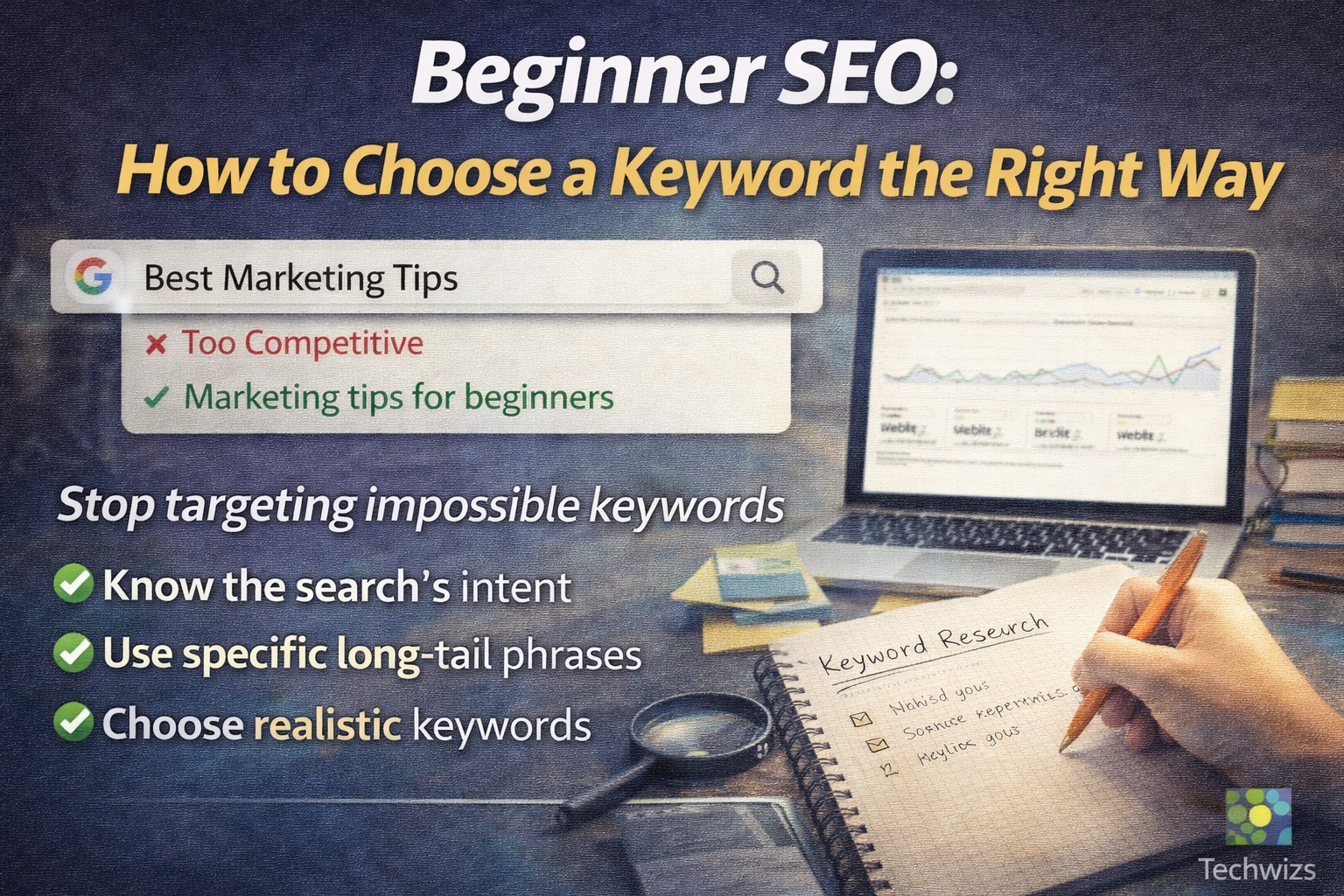
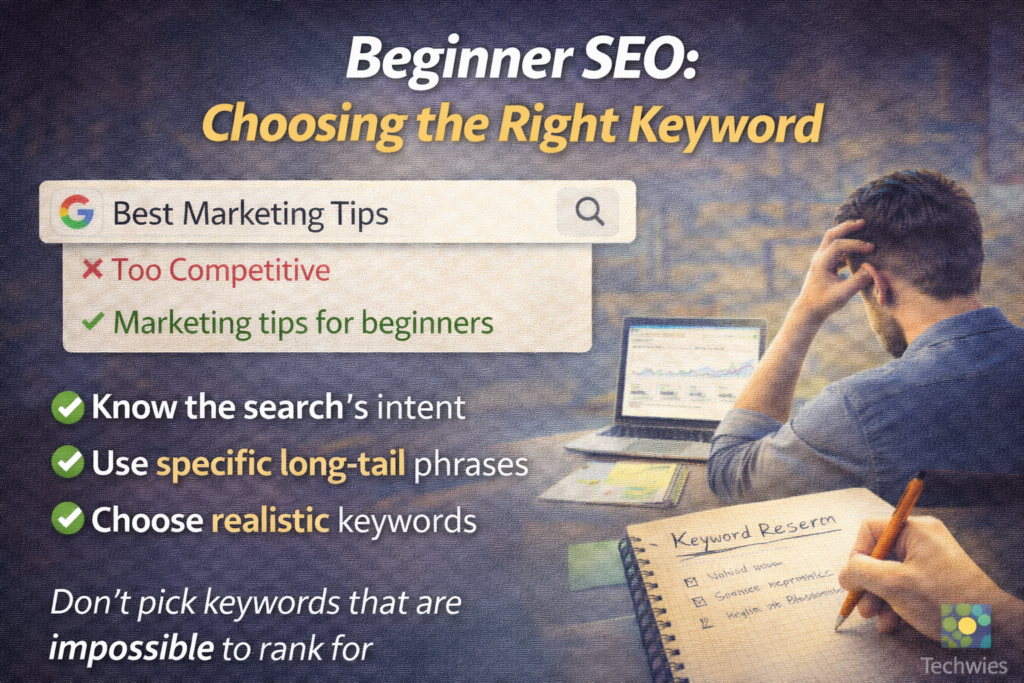
Instead, aim for long-tail keywords.
Example:
- ❌ SEO
- ✅ keyword research for beginners
- ❌ Windows
- ✅ fix slow startup Windows 11
Long-tail keywords:
- Have clearer intent
- Rank faster
- Bring targeted traffic
Step 3: Check Google Before Any Tool
This is the most underrated beginner SEO step.
Do this:
- Search your keyword on Google
- Look at:
- Page titles
- Article types
- Website authority
- Ask:
- Are results guides, forums, videos, or product pages?
If Google shows:
- Reddit posts
- Small blogs
- Niche sites
👉 That’s a good sign for beginners
If you see:
- Forbes
- Wikipedia
- HubSpot
👉 That keyword is probably too competitive.
Step 4: Use Free Tools (Enough for Beginners)
You don’t need paid tools when starting.
Best free keyword tools:
- Google Search autocomplete
- “People also ask”
- “Related searches”
- Google Keyword Planner
- AnswerThePublic (free version)
You’re looking for:
- Clear phrasing
- Real questions
- Natural language
Quick Fix Box
If people ask it in Google, it’s a valid keyword—even without volume numbers.
Step 5: Choose ONE Main Keyword Per Article
One of the most common beginner mistakes is targeting too many keywords.
Correct approach:
- 1 main keyword
- 2–4 close variations (synonyms)
Example:
- Main: keyword research for beginners
- Variations:
- beginner SEO keywords
- how to choose keywords
- SEO keyword basics
This keeps your content focused and readable.
Step 6: Validate Keyword Difficulty (The Simple Way)
Instead of relying on “keyword difficulty scores,” do this:
Ask:
- Are top 5 results highly optimized?
- Do they fully answer the question?
- Are they updated?
If you can:
- Explain it clearer
- Go deeper
- Make it easier
👉 You can compete.
Step 7: Match Content Type to Keyword
Google rewards content alignment.
| Keyword Type | Best Content |
|---|---|
| How to… | Step-by-step guide |
| Best… | Comparison / list |
| What is… | Definition + examples |
| Fix… | Troubleshooting guide |
Mismatch = no ranking.
Common Beginner Keyword Mistakes
- Choosing keywords with zero intent
- Targeting volume instead of relevance
- Writing before keyword research
- Keyword stuffing
- Ignoring Google results
How Many Keywords Should Beginners Target?
Key Takeaway Box
It’s better to rank for 10 small keywords than fail at 1 big one.
Recommended:
- 1 keyword = 1 article
- 2–3 articles per week
- Focus on clarity, not volume
FAQ: Keyword Research for Beginners
How long should a keyword be?
Usually 3–6 words for beginners.
Do I need paid SEO tools?
No. Free tools + Google search are enough at the start.
What if a keyword has low search volume?
Low volume keywords often convert better and rank faster.
Can one article rank for multiple keywords?
Yes, if they share the same intent.
How often should I do keyword research?
Before every article.