
Difficulty: Beginner
What “Hidden Malware” Really Means
Definition Box
Hidden Malware
Malicious software designed to avoid obvious detection by running quietly in the background, often disguising itself as normal system activity.
Hidden malware may:
- Consume CPU/RAM intermittently
- Phone home silently
- Inject itself into legitimate processes
- Persist after reboots
According to security guidance from Microsoft, early detection often comes from behavior—not pop-ups.
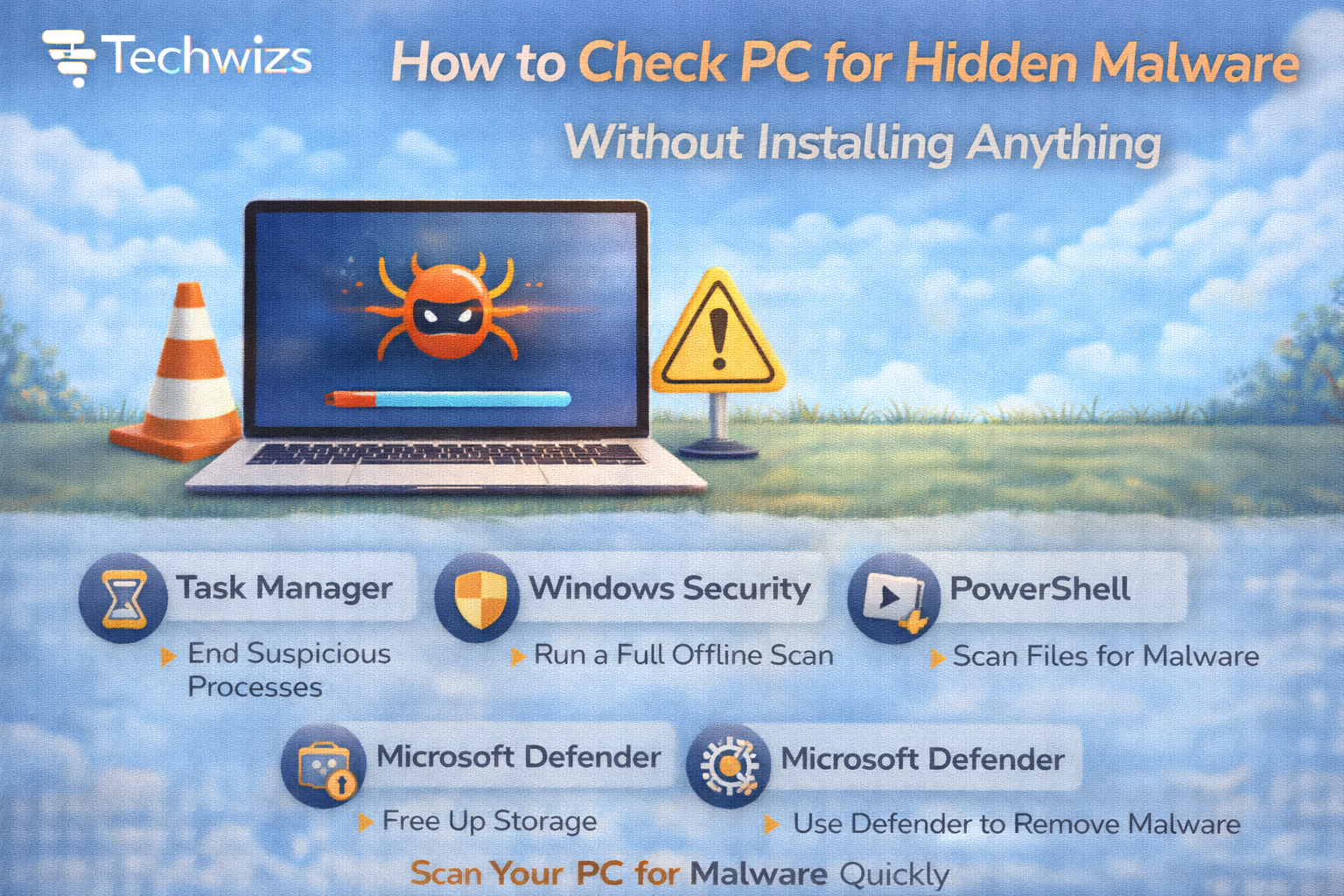
Step 1: Use Windows Security (Already Installed)
Windows includes a full security suite.
Run a Full Scan
- Open Windows Security
- Go to Virus & threat protection
- Select Scan options → Full scan
This checks all files and running processes.
Key Takeaway Box
A full scan catches threats that quick scans can miss—no extra software needed.
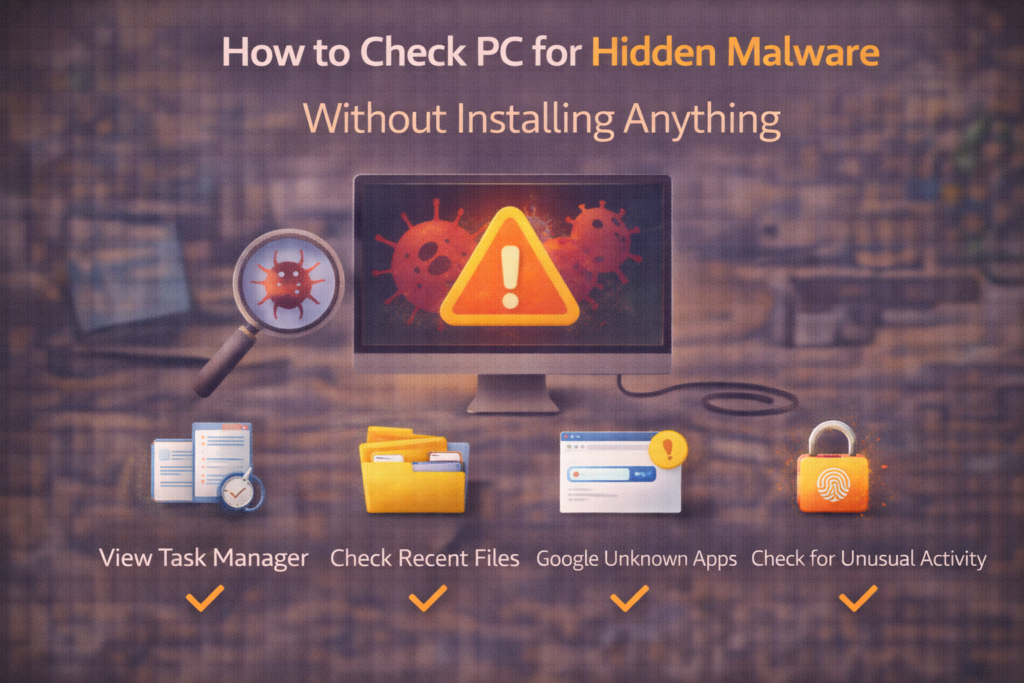
Step 2: Check Running Processes (Fast Red Flags)
Open Task Manager
- Press Ctrl + Shift + Esc
Look for:
- Unknown process names
- Very high CPU or memory usage
- Processes restarting after you end them
Right-click a process → Search online to see if it’s legitimate.
Step 3: Inspect Startup Programs
Hidden malware often launches at startup.
- Task Manager → Startup tab
- Disable:
- Unknown publishers
- Random or suspicious names
Restart and see if performance improves.
Quick Fix Box
Malware that disappears after disabling startup entries is a major red flag.
Step 4: Check Network Activity (Silent Clue)
Use Resource Monitor
- Open Task Manager → Performance
- Click Open Resource Monitor → Network tab
Watch for:
- Constant outbound connections
- Unknown programs using bandwidth
Unexpected traffic while idle is suspicious.
Step 5: Review Windows Defender Protection History
- Windows Security → Protection history
- Look for:
- Blocked threats
- Repeated alerts
- Quarantined items
Even “blocked” attempts tell you something tried to run.
Step 6: Check Browser for Hijacking
Malware often targets browsers.
Check:
- Homepage changes
- Search engine changes
- Unknown extensions
Reset the browser if anything looks off.
Step 7: Look for System Warning Signs
Common Symptoms
- Fans running when idle
- Sudden slowdowns
- Random pop-ups or redirects
- Security settings disabled
Key Takeaway Box
One symptom isn’t proof—but multiple signs together matter.
Step 8: Run Offline Scan (Advanced but Built-In)
Windows Defender Offline Scan
- Windows Security → Scan options
- Select Microsoft Defender Offline scan
This restarts your PC and scans before malware can hide.
What This Method Can and Can’t Detect
Works Well For:
- Common trojans
- Adware
- Crypto miners
- Persistence malware
Limited Against:
- Advanced rootkits
- Firmware-level threats
For most home users, built-in tools are sufficient.
What to Do If You Find Malware
- Let Windows Security remove it
- Change important passwords
- Enable automatic updates
- Monitor system behavior for 48 hours
If problems persist, then consider third-party tools.
FAQs: Check PC for Hidden Malware
1) Is Windows Defender enough?
Yes—for most users with updated systems.
2) Can malware hide from Task Manager?
Some can—but behavior still leaks clues.
3) Should I install antivirus just in case?
Not unless you see confirmed issues.
4) Does resetting the PC remove malware?
Yes—but it’s a last resort.
5) Can malware survive reboots?
Yes—startup persistence is common.