
Difficulty Level: Beginner / Basic User
Why Spotting Fake WhatsApp Messages Matters More Than Ever
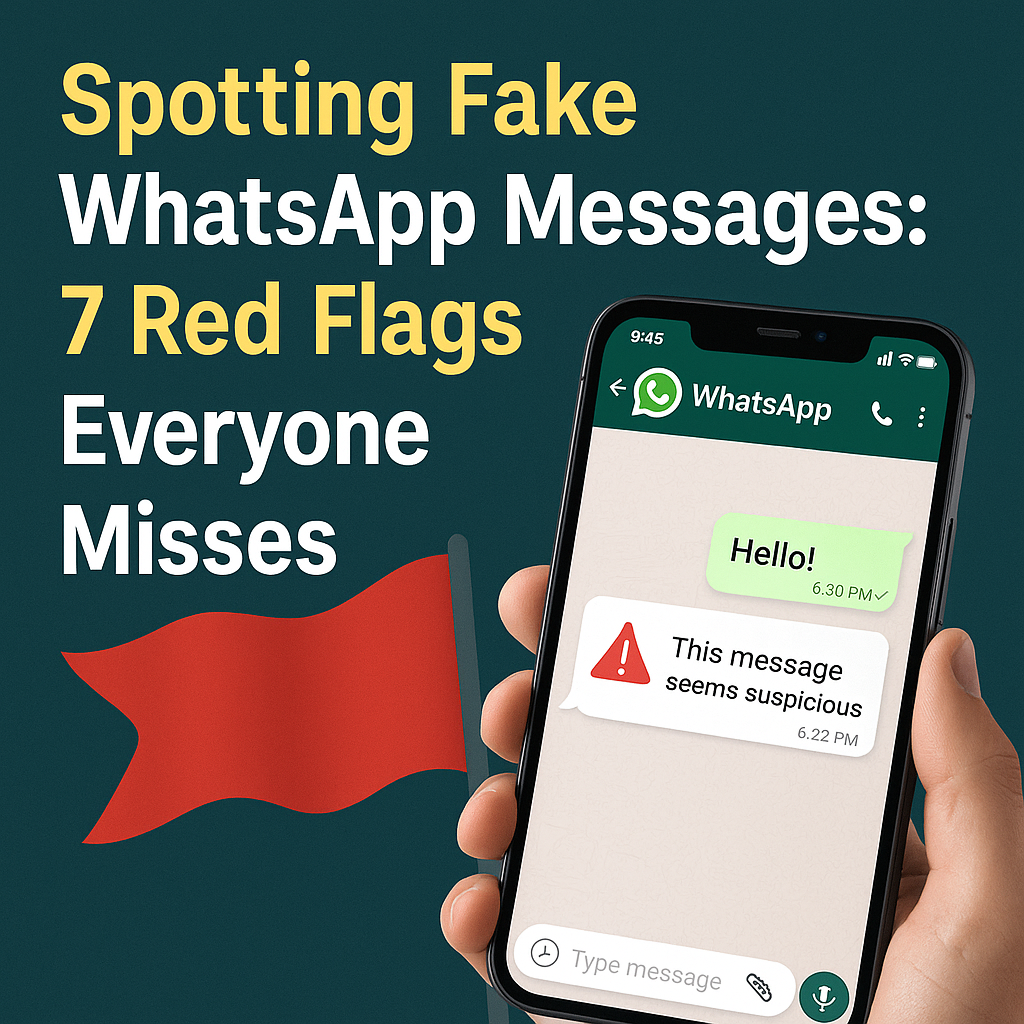
If you’re trying to spot fake WhatsApp messages, you’re not alone — scams on messaging apps have increased dramatically over the last few years, and criminals now mimic real brands and family members with alarming accuracy. Spotting fake WhatsApp messages early can prevent financial loss, identity theft, and unauthorized access to your accounts.
According to Meta’s 2024 WhatsApp Safety Report, more than 40% of scam messages impersonate trusted contacts, making awareness your first line of defense.
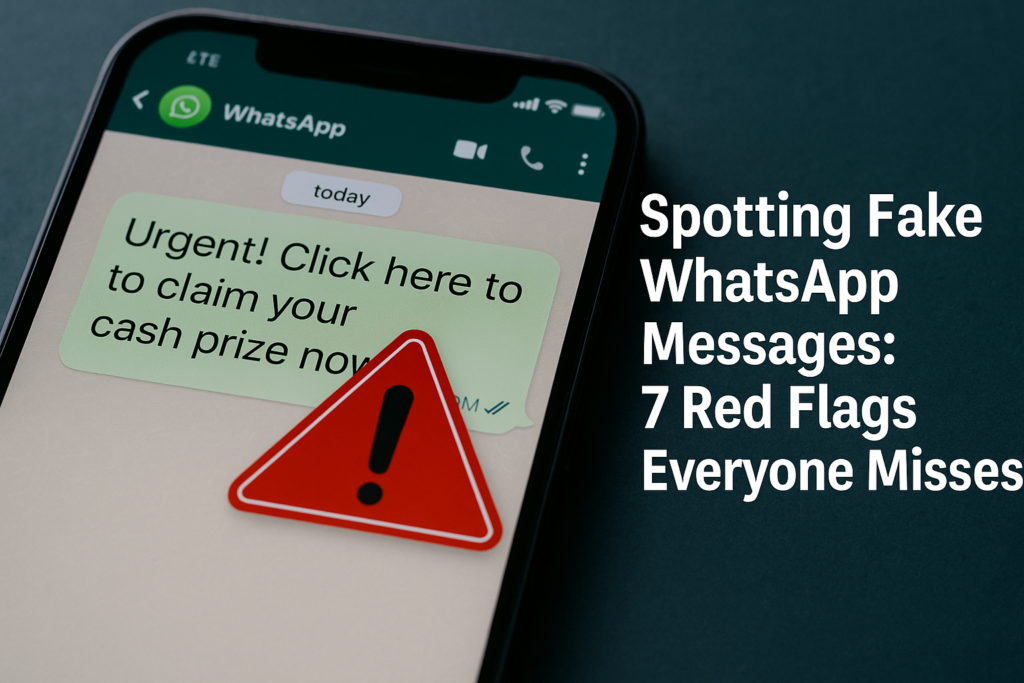
1. Urgency Traps: A Major Red Flag When Spotting Fake WhatsApp Messages
Scammers rely on emotional pressure to stop you from thinking clearly.
Common phrases include:
- “Your bank account will be locked in 1 hour.”
- “Your package cannot be delivered. Verify now.”
Legitimate organizations never force immediate action.
2. Unknown Numbers Pretending To Be Someone Familiar
A classic trick when spotting fake WhatsApp messages is noticing a new number claiming to be someone you know.
Red flags include:
- Odd tone or incorrect grammar
- Unusual requests for money
- Claims of an “emergency” but refusing to call
Always verify through a voice call.
3. Suspicious Links Hidden in Messages
Fake WhatsApp messages often include links designed to steal your login or banking details.
Examples:
- paypaI.com (using a capital “i”)
- gov-my-update.net
- poslaju-delivery-verify.shop
If you didn’t request a verification, don’t tap anything.
4. Poor Grammar and Strange Formatting
Spelling errors are one of the easiest ways of spotting fake WhatsApp messages.
Banks, government agencies, and delivery services rarely make these mistakes.
5. Too-Good-To-Be-True Prizes and Giveaways
Scammers know people react to excitement.
Green flags: You didn’t enter any contest.
Red flag: “Congratulations, you won a new phone — click here!”
6. Requests for Personal Information or OTP Codes
WhatsApp, banks, and e-wallet services will never ask for:
- OTP codes
- Passwords
- Bank account info
If a message asks, it’s a scam. No exceptions.
7. Messages Urging You To Forward Them
Chain-message scams appear legitimate but spread misinformation or harmful links.
Examples:
- “Forward to 10 people to avoid account suspension.”
- “Ministry of Health warning!” (usually fake)
Key Takeaway Box
Spotting fake WhatsApp messages becomes easy once you know the patterns: urgency, unknown numbers, suspicious links, and requests for private information are the biggest red flags. Stay cautious and verify before responding.
How To Protect Yourself Immediately
Enable WhatsApp Security Features
Turn on:
- Two-step verification
- Device login alerts
Go to Settings → Account → Two-step verification.
Verify Before Responding
If the message claims to be:
- A bank
- A courier
- A government agency
- A friend in trouble
Call the official number or the real person.
Use “Report” and “Block”
If something feels wrong, trust your instincts.
WhatsApp collects these reports to fight scammers.
FAQ — Quick Answers You Can Trust
1. Can scammers hack my phone through a WhatsApp message?
Not from a simple text alone — but tapping malicious links can compromise your device.
2. How do I confirm a message from a bank is real?
Always call the number on their official website — never from the message.
3. Why do scammers often pretend to be family members?
Because emotional urgency bypasses logical thinking. This tactic is known as social engineering.
4. Should I delete fake messages?
Yes — but report them first to help others stay safe.
5. What if I accidentally tapped a link?
Disconnect Wi-Fi immediately, scan your phone with antivirus software, and change your passwords.