
Difficulty: Beginner
What Is ARM (And Why It’s Different)?
Definition Box
ARM Architecture
A processor design focused on energy efficiency and simplified instruction sets, commonly used in smartphones and increasingly in laptops.
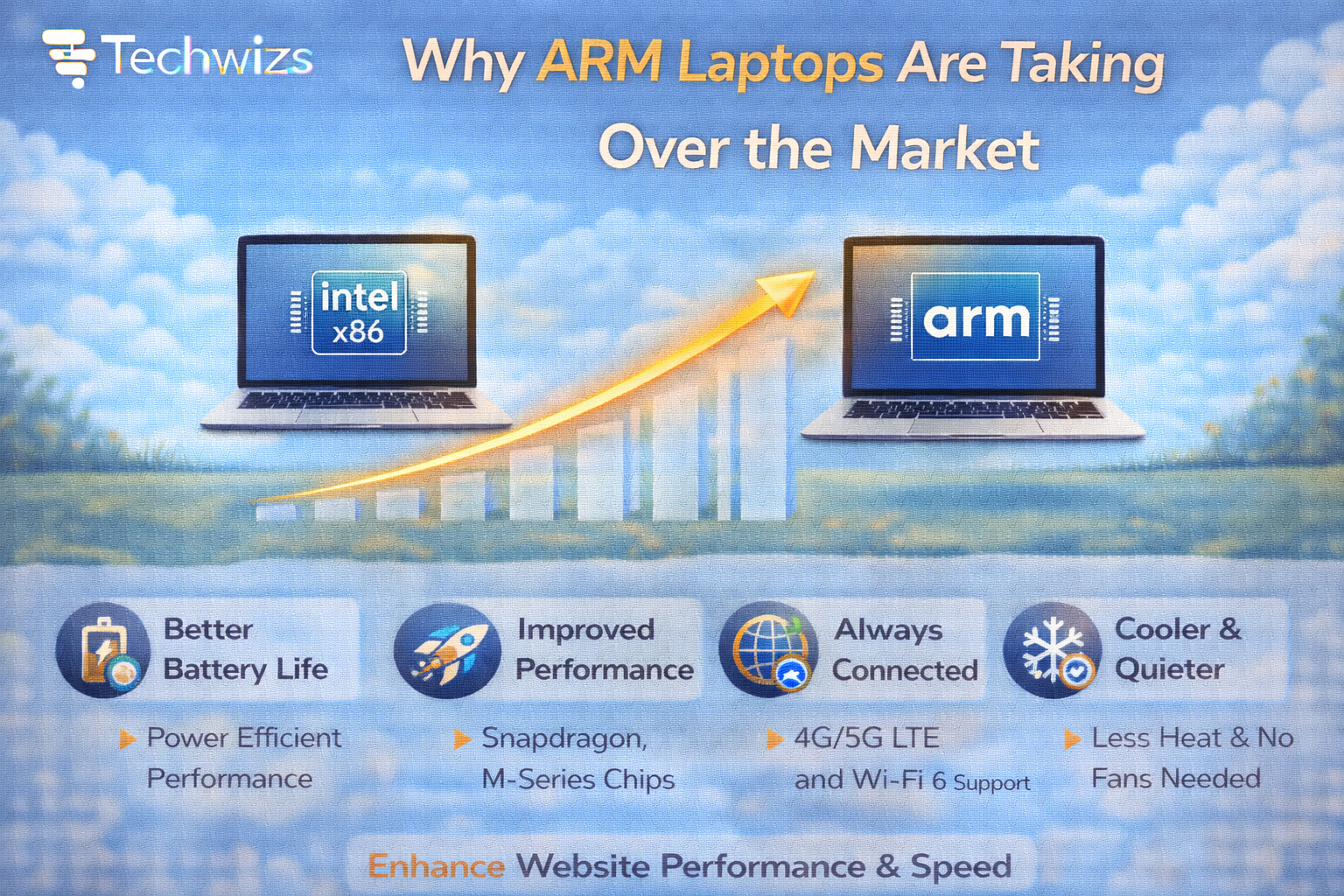
Unlike traditional x86 chips, ARM processors are designed for low power consumption and high efficiency. That design advantage is a major reason ARM laptops are taking over performance-per-watt comparisons.
The architecture is licensed by Arm Holdings, which allows multiple manufacturers to build custom ARM-based processors.
Battery Life Is the Biggest Game-Changer
One of the main reasons ARM laptops are taking over is battery life.
Modern ARM systems often deliver:
- 15–25 hours of real-world usage
- Instant wake from sleep
- Minimal idle power drain
Instead of sacrificing performance for portability, ARM chips optimize both.
Key Takeaway Box
ARM’s strength isn’t raw power—it’s power efficiency.
Apple Proved It Could Work
When Apple introduced its M-series chips, it demonstrated that ARM could outperform many traditional laptop processors while consuming less power.
This changed perception across the industry:
- Faster boot times
- Cooler operation
- Silent fanless designs
- Strong creative performance
After that shift, the narrative around ARM laptops changed dramatically.
Windows on ARM Is Maturing
Early Windows ARM devices struggled with compatibility. That’s no longer the case.
With improvements from Microsoft, Windows now supports:
- Native ARM apps
- Efficient emulation for x86 apps
- AI acceleration features
- Better driver compatibility
In 2026, most mainstream productivity apps run smoothly on ARM-based Windows laptops.
AI Is Accelerating ARM Adoption
ARM processors integrate:
- Neural Processing Units (NPUs)
- On-device AI acceleration
- Efficient machine learning tasks
Chipmakers like Qualcomm are building ARM chips specifically optimized for AI workloads.
This makes ARM laptops attractive for:
- AI assistants
- Real-time transcription
- Image processing
- Smart productivity features
Quick Fix Box
ARM excels in AI tasks because it’s built for efficient parallel processing.
Performance Has Closed the Gap
ARM used to be seen as “mobile-class” performance. Not anymore.
Modern ARM laptops now offer:
- Strong multi-core performance
- Efficient video editing capabilities
- Competitive productivity benchmarks
For most users—students, professionals, remote workers—the difference is no longer noticeable.
Why Manufacturers Prefer ARM
Laptop makers benefit from ARM because:
- Smaller motherboard designs
- Lower cooling requirements
- Longer battery marketing claims
- Integrated connectivity (5G, Wi-Fi)
This flexibility encourages more ARM models across price ranges.
Compatibility: The Last Barrier
ARM adoption is rising—but compatibility still matters.
Current Reality:
- Office apps: Fully supported
- Browsers: Native support
- Creative tools: Mostly optimized
- Legacy enterprise apps: Sometimes require emulation
For average users, this is no longer a major limitation.
ARM vs Traditional x86 (Simplified)
| Feature | ARM | x86 |
|---|---|---|
| Battery Life | Excellent | Good |
| Heat Output | Low | Higher |
| Fan Noise | Minimal | Moderate |
| Legacy Compatibility | Improving | Excellent |
| AI Integration | Strong | Growing |
Key Takeaway Box
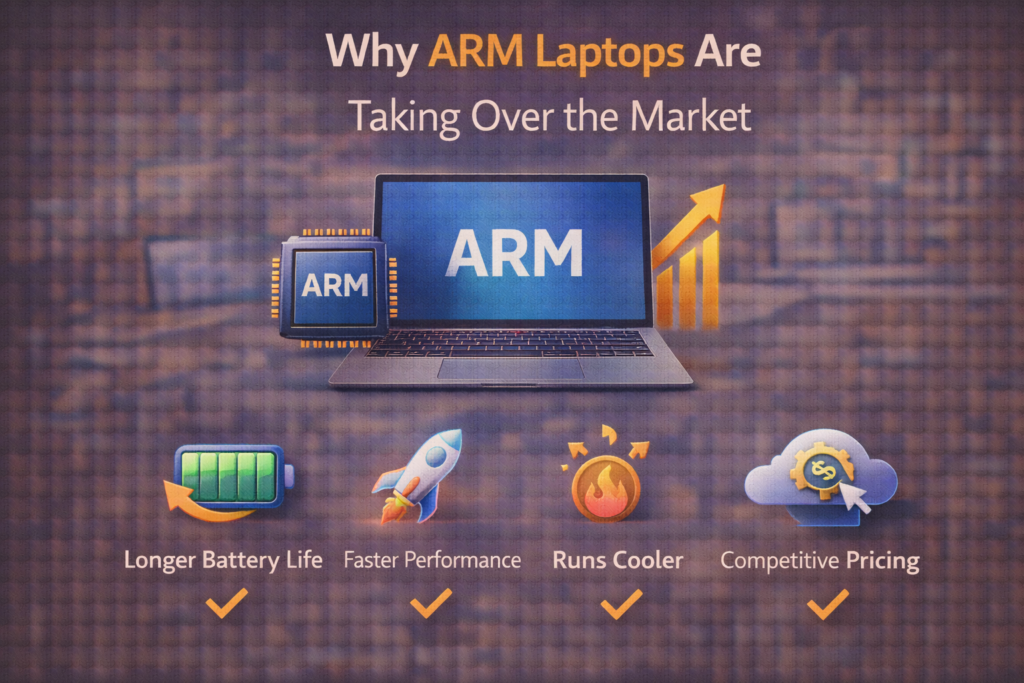
ARM is redefining laptop priorities: efficiency first, performance second—but now both are strong.
Are ARM Laptops Right for You?
Choose ARM If:
- You value long battery life
- You use productivity apps
- You want thin, quiet laptops
- You rely on cloud services
Choose x86 If:
- You use niche enterprise software
- You rely on legacy drivers
- You require maximum compatibility
For most modern users, ARM laptops are taking over because they align better with everyday needs.
What This Means for the Future
Industry trends suggest:
- More ARM chips in business laptops
- Greater AI integration
- Improved Windows optimization
- Wider enterprise adoption
The shift is not sudden—but steady and accelerating.
FAQs: ARM Laptops Are Taking Over
1) Are ARM laptops faster than Intel or AMD?
In efficiency and battery life—yes. Raw peak power depends on workload.
2) Do apps work on ARM?
Most mainstream apps do.
3) Is gaming better on ARM?
Not yet—x86 still leads in gaming.
4) Why are ARM laptops quieter?
Lower power consumption means less heat and fewer fans.
5) Will x86 disappear?
No—but ARM market share is growing.