
Every day, more people fall victim to phone scams and WhatsApp scams, losing money, personal data, and even access to their accounts. Scammers are becoming smarter, using psychological tricks and technology to make their messages or calls look real. Understanding how these scams work is your first and strongest layer of protection. Whether you’re tech-savvy or not, learning these simple steps can save you from major trouble.
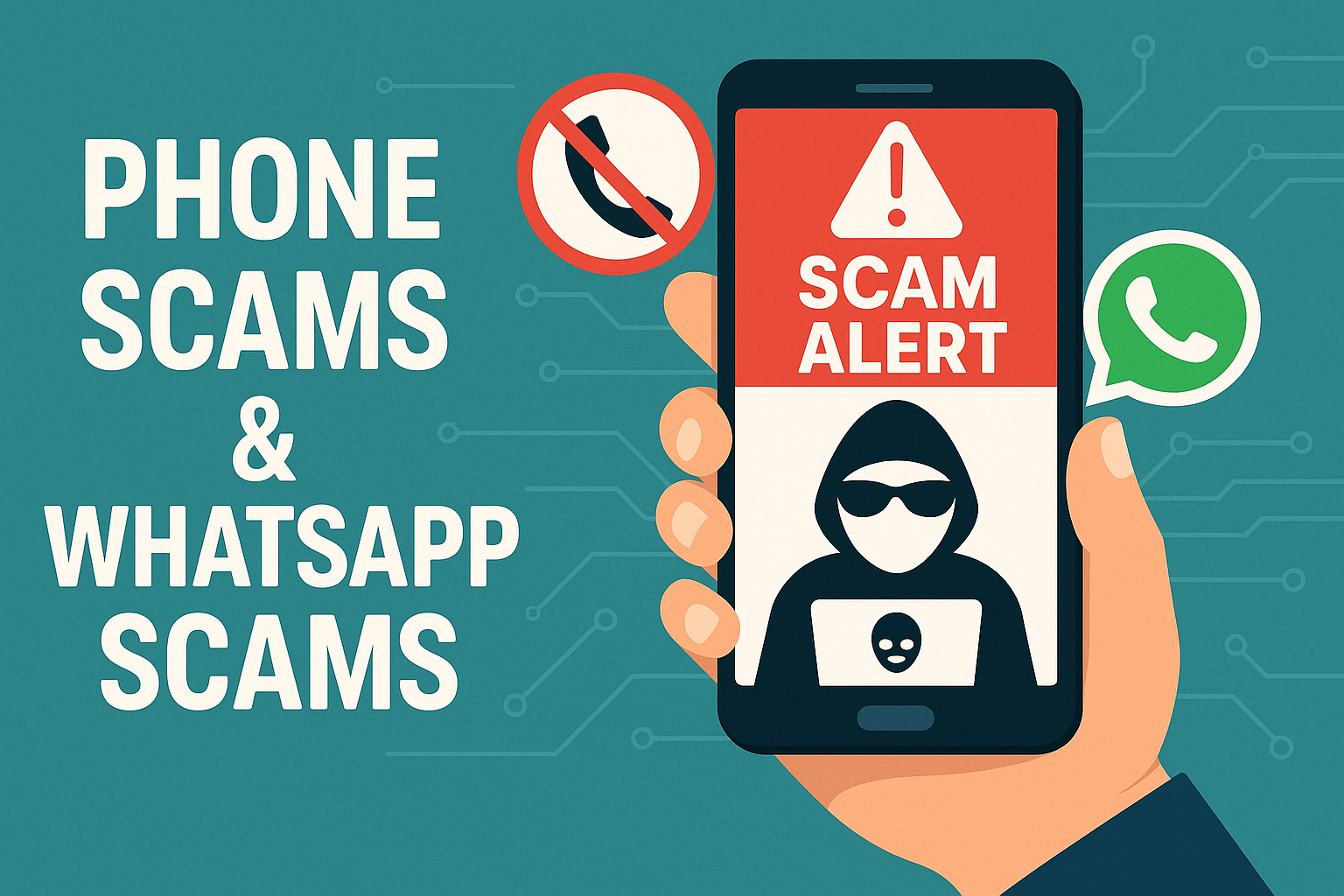
What Are Phone Scams & WhatsApp Scams?
Phone scams and WhatsApp scams are fraudulent attempts to trick you into giving away money, passwords, OTP codes, bank details, or sensitive personal information.
Common Forms of These Scams
- Fake “bank security” calls
- Scammers pretending to be government agencies
- WhatsApp impersonation (friend/family asking money)
- Delivery scams
- Loan or investment schemes
- Fake job or part-time earnings messages
Stat: According to the FBI IC3 Report, global scam losses exceeded USD 12.5 billion in 2023, with mobile-based scams growing the fastest.
Warning Signs of Phone Scams and WhatsApp Scams
Scammers often use fear, urgency, and emotional pressure. Look out for:
1. Urgent Requests for Money (Keyphrase Variant)
Messages like “Please help me now!” or “I need money urgently” are classic WhatsApp scam tactics.
2. Asking for OTP or Login Codes
Legitimate companies never ask for your OTP.
If someone asks, it’s 100% a scam.
3. Unknown Numbers Claiming to Be Authorities
Bank officers, police, tax departments, and delivery companies don’t contact you via WhatsApp for personal data.
4. Suspicious Links
Fake links often look real, but hide malicious tracking or phishing pages.
How to Protect Yourself From Phone Scams & WhatsApp Scams
1. Never Share Personal Details on Calls or WhatsApp
Banks, government offices, and legit companies will never request sensitive info through messages.
2. Turn On WhatsApp Two-Step Verification
A simple 6-digit pin can prevent account takeover—even if scammers get your SIM.
3. Verify Voice & Identity
If a friend asks for money, call them directly.
Many scammers use hacked or cloned accounts.
4. Block and Report Suspicious Numbers
Use WhatsApp’s built-in “Report” button to flag scammers.
5. Educate Elderly Family Members
Scammers target seniors the most.
Teach them:
- Not to give OTP
- Not to click unknown links
- Not to answer strange calls
Key Takeaway Box
If a call or message feels urgent, emotional, or asks for money or codes — treat it as a scam until proven otherwise. Always verify through official channels.
FAQ – Phone Scams & WhatsApp Scams
1. How do scammers get my WhatsApp number?
From leaked databases, public profiles, hacked contact lists, or random number generators.
2. What should I do if I clicked a scam link?
Immediately change passwords, log out devices, activate 2FA, and scan your phone for malware.
3. Can someone hack my WhatsApp without OTP?
No — OTP is required. But scammers trick users into giving OTP voluntarily.
4. Should I reply to suspicious messages?
No. Block and report immediately.
5. How can I protect my parents or seniors?
Teach them the basics: don’t send money, don’t share codes, verify calls, and block unknown contacts.