
Difficulty: Beginner
What Actually Changed in 2026 (Compared to 2025)
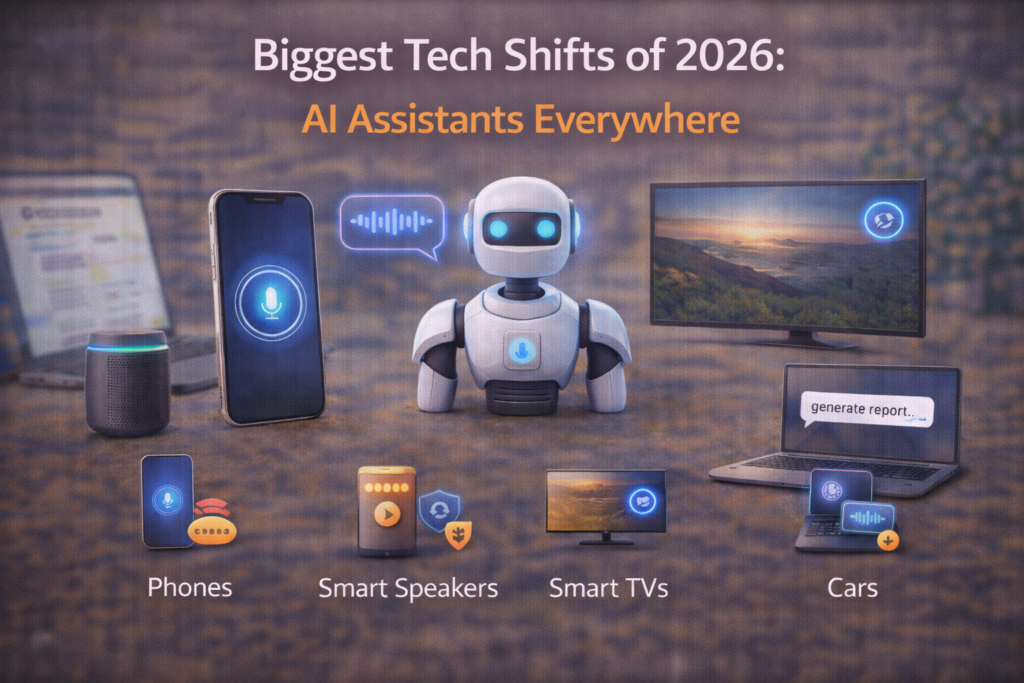
In 2025, AI assistants became common.
In 2026, they became expected.
The difference:
- From reactive → proactive
- From single app → cross-system
- From optional → default
Users no longer ask if AI exists in their tools—they assume it does.
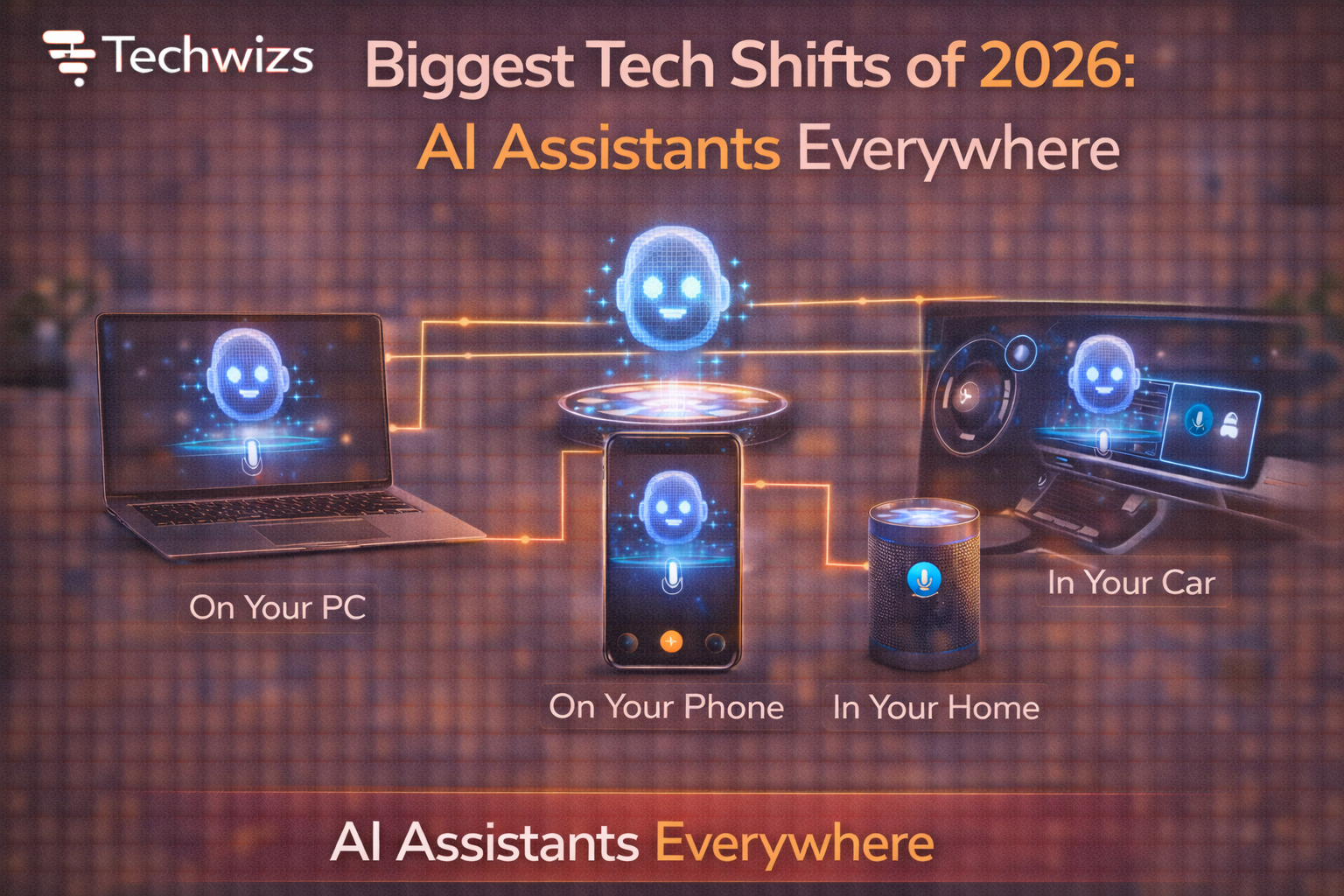
AI Assistants Became OS-Level Infrastructure
In 2026, major platforms pushed AI deeper into the core of their ecosystems:
- Microsoft expanded AI across Windows, Office, and enterprise workflows
- Apple strengthened on-device intelligence across iOS and macOS
- Google embedded AI into Search, Android, Chrome, and productivity apps
Definition Box
OS-Level AI Assistant
An assistant that understands user context across the operating system, apps, files, and actions—without needing manual prompts.
Context Awareness Became the Real Breakthrough
AI assistants in 2026 don’t just answer questions. They understand:
- What app you’re using
- What file you’re editing
- What you worked on earlier
- What task usually comes next
Key Takeaway Box
The biggest shift isn’t smarter answers—it’s AI that understands what you’re doing before you ask.
Search Changed (Again)
Search in 2026 became less about links and more about resolution.
- Direct answers replaced result pages
- Follow-up questions became conversational
- AI summarized, compared, and acted on information
According to usage trends from StatCounter, AI-assisted search significantly reduced traditional click-through behavior in 2026.
Productivity Tools Started “Working With You”
AI assistants now:
- Draft emails in your tone
- Summarize meetings automatically
- Turn notes into tasks
- Generate reports from raw data
- Suggest next steps proactively
This removed friction rather than adding features.
Quick Fix Box
If your tools still require manual setup for every task, they’re behind the 2026 curve.
On-Device AI Became the New Standard
A major 2026 shift was local AI processing:
- Faster responses
- Better privacy
- Offline capabilities
- Lower cloud dependency
This mattered most for laptops, phones, and regulated industries.
AI Assistants Changed How People Learn and Decide
Instead of:
- Searching → reading → deciding
People now:
- Ask → refine → act
AI assistants became decision accelerators, not just information sources.
New Risks Emerged With Ubiquitous AI
With AI everywhere, new concerns grew:
- Over-reliance on automation
- Reduced critical thinking
- Privacy and data boundaries
- Trust in AI-generated outputs
The challenge in 2026 is balance, not adoption.
Who Benefits Most From This Shift?
- Knowledge workers
- Remote and hybrid teams
- Small businesses with limited staff
- Individuals managing information overload
AI assistants narrowed the productivity gap more than any recent technology shift.
What This Means Going Forward
The 2026 shift isn’t the end—it’s the foundation.
Next expectations include:
- Transparent AI controls
- Stronger personalization
- Clearer data boundaries
- Human-in-the-loop defaults
The biggest change isn’t technology—it’s what users now expect software to do for them.
FAQs: Biggest Tech Shifts of 2026
1) Is 2026 really different from 2025?
Yes. 2025 introduced AI assistants; 2026 normalized them everywhere.
2) Are AI assistants replacing jobs?
They replace tasks, not entire roles.
3) Do you need technical skills to use them?
No. Most are designed to feel invisible.
4) Is privacy getting worse?
Not necessarily—on-device AI improved local control.
5) Will this slow down?
Unlikely. Integration is accelerating.